How to Build a Swimming Pool?
December 10th, 2025

How to build a swimming pool is one of the most significant and rewarding home improvement projects a homeowner can undertake. It not only creates a luxurious leisure space but also enhances the property’s value and aesthetic appeal. In India, where climates often permit year-round use, a pool is a long-term investment in lifestyle and health.
This article provides a comprehensive, step by step guide to pool construction, covering everything from initial budgeting and design choices to energy efficiency and long-term maintenance, ensuring you have all the knowledge required before diving into your project.
1. Planning and Research
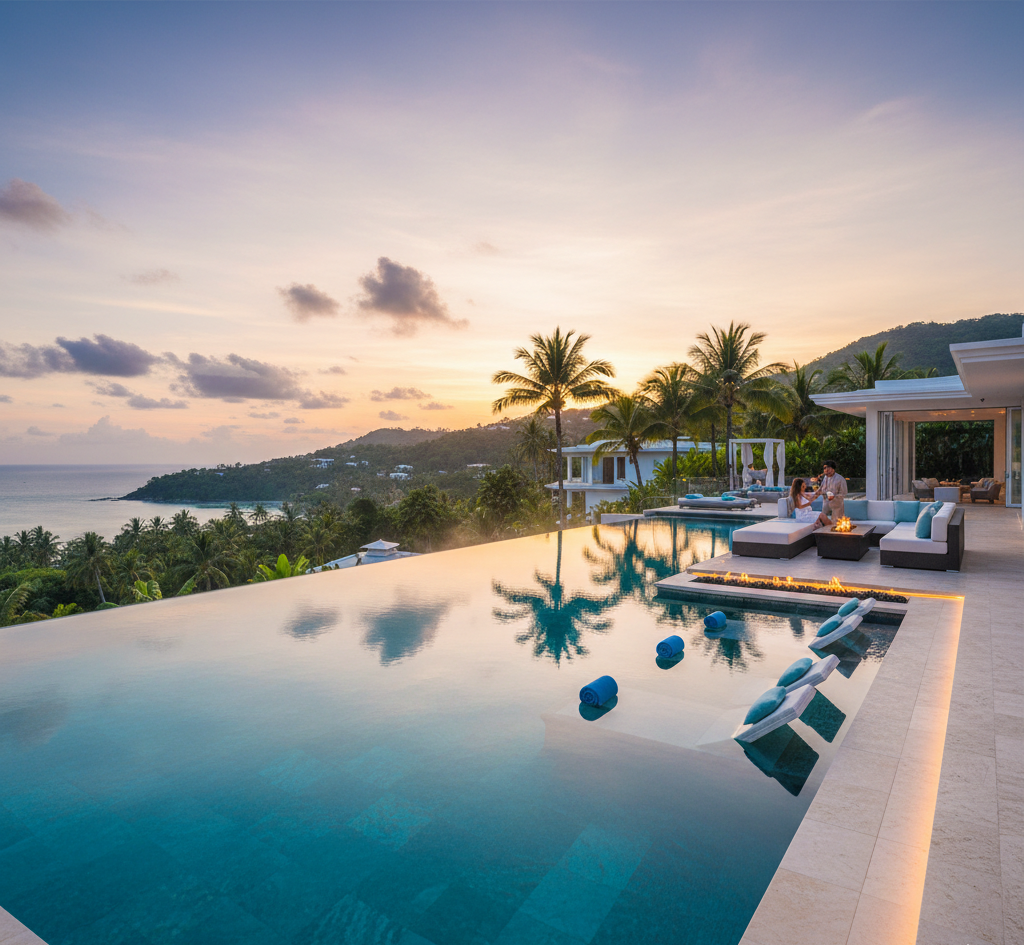
Thorough planning is the foundation of a successful, budget-controlled pool build, especially when coordinating with professional swimming pool builders that’ll help you understand how to build a swimming pool.
Define the Purpose and Design
Start by defining the pool’s main purpose when learning how to build a swimming pool.
- Recreational/Family Pool: Variable depth (typically 3.5 ft to 6 ft).
- Lap Pool: Rectangular, consistent shallow depth (4 ft to 5 ft).
- Plunge/Therapy Pool: Small footprint, deep water, or integrated spa jets.
A clear, simple design (like a basic rectangle) is significantly less expensive to excavate and build than complex free-form shapes, which require intricate falsework and more labor hours.
Specialized Pool Types: Plunge and Lap Pools
While most pools are multi-purpose, two specialized designs are increasingly popular for homeowners with specific needs, space constraints, or fitness goals: Plunge Pools and Lap Pools.
Plunge Pools
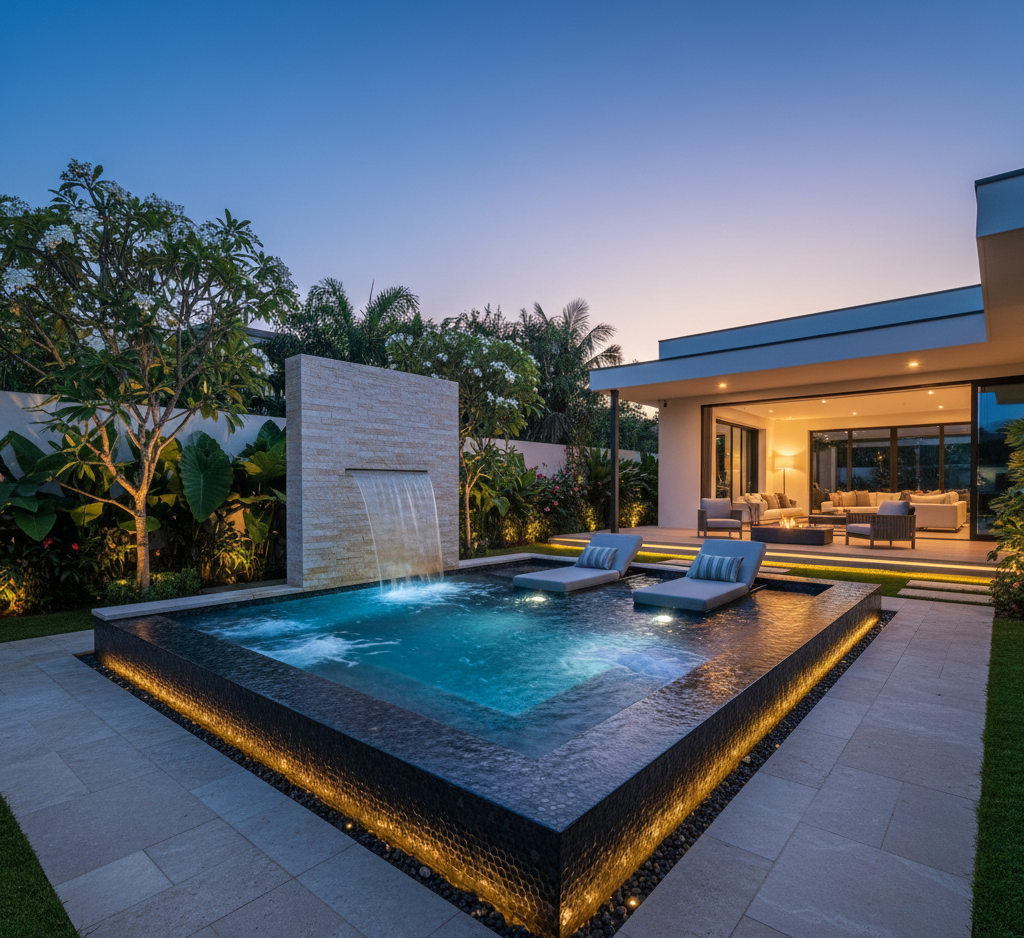
Plunge pools are compact pools primarily designed for relaxation, cooling off, and hydrotherapy, rather than swimming laps. They are an ideal solution for:
- Small Backyards/Courtyards: Their small footprint fits in tight urban spaces.
- Relaxation: Often include built-in seating, spa jets, or a bubble blower system.
- Child Safety: Their consistent, shallow to moderate depth (typically 1.2 to 1.7 meters) is often safer for children gaining water confidence.
| Characteristic | Detail |
| Primary Use | Soaking, cooling off, relaxation, socialising, rehabilitation. |
| Typical Size | Smaller, often 2 to 4 meters wide by 2 to 7 meters long. |
| Shape | Often square or more compact rectangular designs. |
| Aesthetics | Creates a luxurious, spa-like oasis. |
Lap Pools

Lap pools are explicitly designed for fitness and continuous swimming. Their long, narrow shape makes them perfect for exercising without taking up a wide swath of backyard space.
| Characteristic | Detail |
| Primary Use | Swimming laps for exercise, fitness training, and rehabilitation. |
| Typical Size | Long and narrow, often 1.5 to 4 meters wide by12 to 25 meters long(minimum of 8 meters for short laps). |
| Shape | Always rectangular to facilitate straight swimming. |
| Aesthetics | Suits modern, streamlined outdoor living areas. |
Set a Realistic Budget:
Pool costs fluctuate widely based on location, size, and material quality. The following estimates are for a standard in-ground pool (approx. 24ft x 12ft) in a metropolitan area.
| Pool Type | Estimated Cost Range (Installed) | Cost Per Sq. Ft. (Approx.) | Key Budget Factor |
| Above-Ground Pools | ₹1.5 Lakh – ₹6 Lakh | ₹800 – ₹1,500 | Structure & Ease of Installation |
| Vinyl Liner (In-Ground) | ₹6 Lakh – ₹10 Lakh | ₹1,200 – ₹2,000 | Liner Replacements Every 5–10 Years |
| Fiberglass (In-Ground) | ₹7 Lakh – ₹13 Lakh | ₹1,800 – ₹3,200 | Shell Transport & Quick Install |
| Concrete (Gunite) | ₹10 Lakh – ₹20 Lakh+ | ₹2,500 – ₹4,500+ | Customization & Construction Time |
Always allocate 10–15% of the total budget as a contingency fund for unforeseen site conditions such as rocky soil or high groundwater which is a very common challenge in Indian pool construction.
Check Local Regulations and Permits
Before starting any physical work, you must obtain a building permit from your local municipality (Nagar Nigam/Maha Nagar Palika). You will also require separate permits for electrical and plumbing installations. Compliance with mandatory pool fencing and setback (minimum distance from property lines) regulations is essential to avoid fines or demolition orders.
2. Choosing the Right Pool Type

The choice of pool material dictates the aesthetic, construction timeline, and long-term maintenance needs.
| Material | Customization | Construction Time | Long-Term Maintenance |
| Concrete (Gunite/Shotcrete) | Highest (Unlimited Shape/Depth) | Longest (3–5 months) | High (Requires resurfacing every 10–15 years) |
| Fiberglass (FRP) | Limited (Pre-Molded Shells) | Quickest (2–4 weeks) | Lowest (Smooth, non-porous surface resists algae) |
| Vinyl Liner | Moderate (Flexible Shapes/Sizes) | Moderate (6–10 weeks) | Medium (Liner must be replaced periodically) |
For Indian conditions, Concrete (Gunite) remains the most popular choice due to its robustness and ability to withstand varied soil and water table conditions, particularly for custom overflow or infinity edge designs.
Specialized Construction Methods
The construction of the pool shell itself often falls into two main categories: Precast (often called Inbuilt/Prefabricated) or Cast In-Situ (built on site).
| Feature | Precast (Inbuilt/Prefabricated) Pool | Cast In-Situ (On-Site Construction) Pool |
| Definition | A complete, monolithic shell (usually fiberglass or precast concrete) manufactured in a factory. | The pool shell is formed and constructed entirely on your site using materials like Gunite/Shotcrete or poured concrete. |
| Customization | Limited to manufacturer’s molds and sizes. | Total design flexibility in size, shape, depth, and features. |
| Installation Speed | Fastest. Installed in days or a few weeks. | Slowest. Requires a longer build process for forming, spraying/pouring, and curing (typically 6–12 weeks). |
| Site Access | Requires wide, clear access for the crane to lift and place the shell. | Suitable for tight or restricted access sites as materials are brought in piece by piece. |
3. Hire the Right Professionals
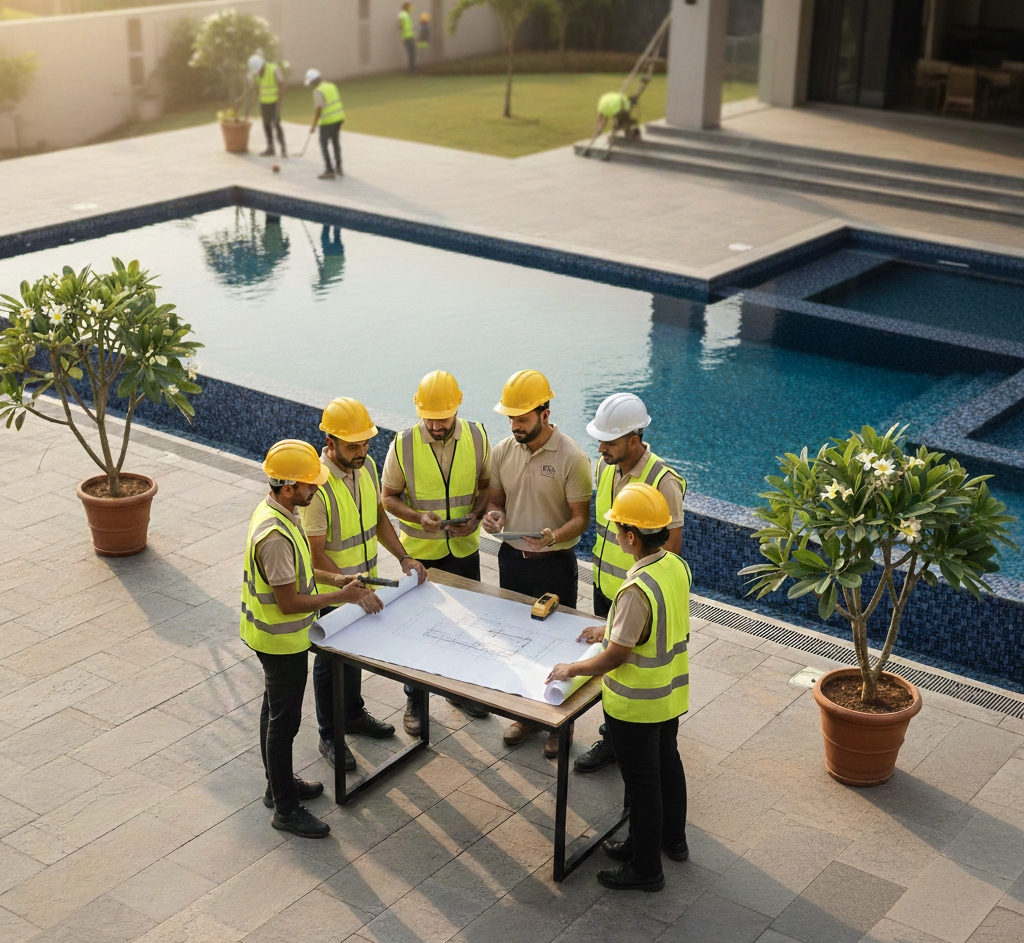
Selecting Your Contractor: Turnkey vs. Sub-Contracting
The key to project success is selecting a reputable contractor.
- Turnkey Solution: One single contractor handles design, construction, equipment sourcing, and commissioning. This is often more cost-effective and efficient as it streamlines communication and minimizes margin stacking between multiple sub-contractors.
- Sub-Contracting: Hiring separate contractors for excavation, RCC work, plumbing, and finishing. This offers more control but requires significant time and expertise to manage coordination and quality control.
Ensure all specialized professionals (plumbers, electricians) are licensed to guarantee safety and compliance with the National Electrical Code (NEC).
4. Excavation, Foundation, and Drainage
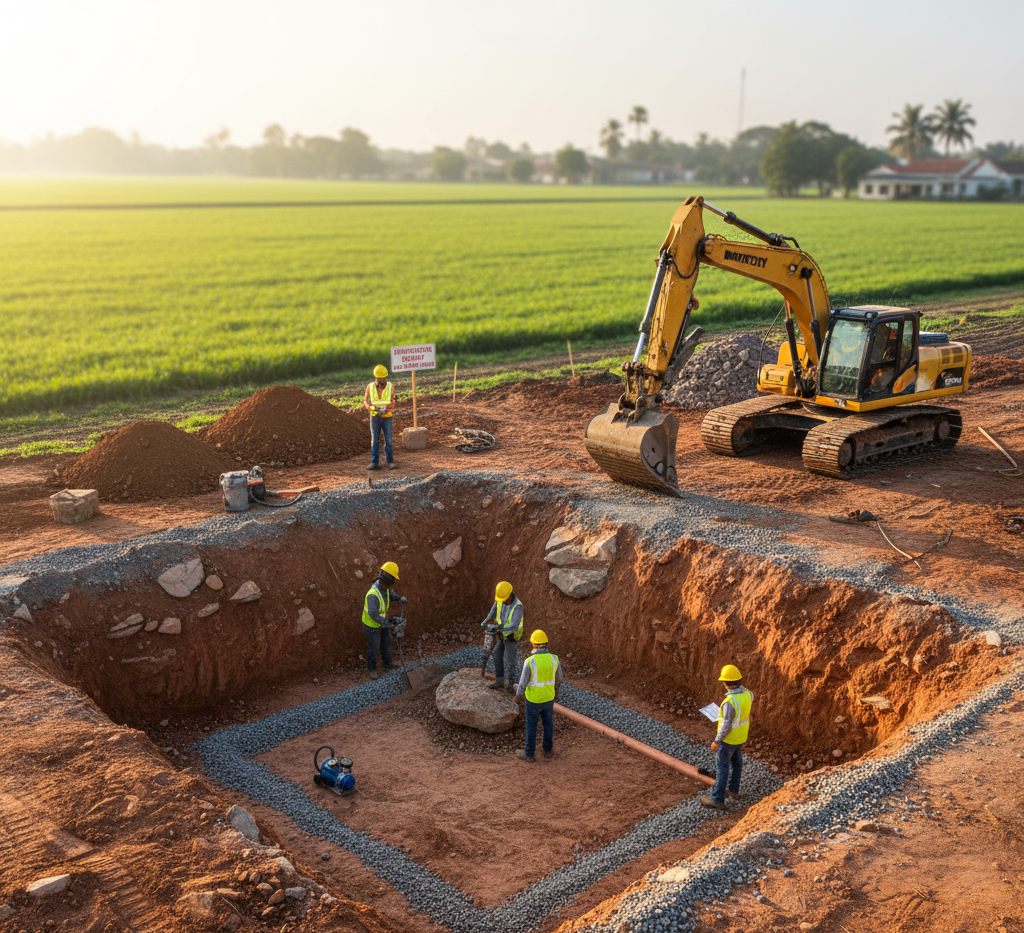
This is where the project costs can unexpectedly increase due to site conditions.
Soil Analysis and Location
A geotechnical engineer must conduct soil testing. Building on rocky, high clay, or high groundwater level areas significantly increases excavation time and foundation costs, as it requires specialized equipment and advanced waterproofing measures. Choosing a flat, accessible location minimizes costs.
Proper Drainage (Hydrostatic Pressure)
A perimeter drainage system is critical. Failure to install adequate drainage can lead to hydrostatic pressure—water-saturated soil pushing against the pool structure from beneath or the sides—which can cause cracks or structural failure.
5. Pool Structure and Shell Installation
Construction Methods Explained
Fiberglass/Precast Pools (Inbuilt/Prefabricated):
- The completed shell is transported to the site.
- The hole is excavated and a level base of gravel or sand is prepared.
- A crane lowers the shell into the excavation.
- Plumbing is connected and the surrounding void is backfilled.
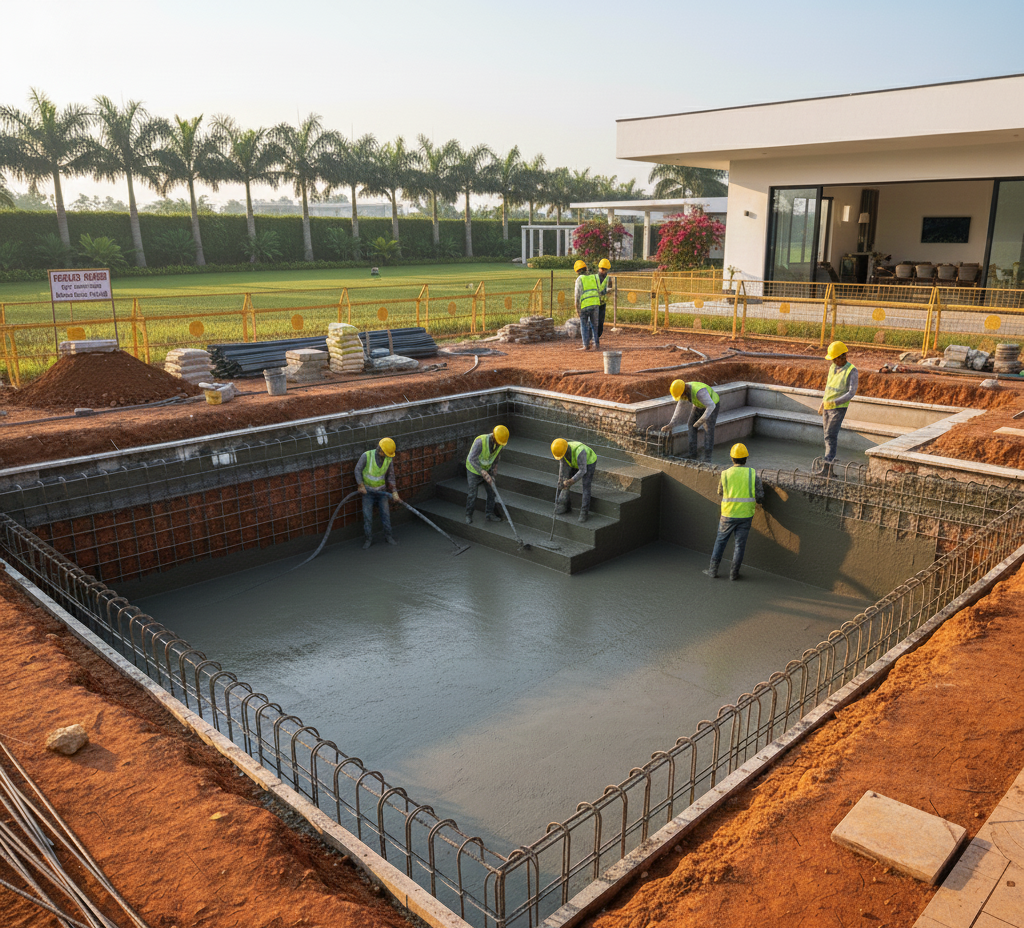
Gunite/Shotcrete Pools (Cast In-Situ):
- The hole is excavated, and the rebar framework (steel skeleton) is installed.
- A high-pressure mixture of concrete and sand (Gunite or Shotcrete) is sprayed onto the rebar, which is then shaped and smoothed by hand.
- This method creates a single, monolithic, highly durable, and fully customized structure.
For concrete pools, structural RCC work alone can range from ₹800 to ₹1,200 per sq. ft. of the pool area. During this phase of pool construction, precision is crucial especially when shaping, curing, and waterproofing concrete pools.
6. Plumbing, Electrical, and Automation Systems

This is the central nervous system of your pool. Quality components ensure long-term efficiency and safety.
Essential Plumbing
The system must be pressure tested before being covered. Components include:
- Skimmers (surface cleaning)
- Returns (filtered water re-entry)
- Bottom Drains (deep circulation)
Safety-First Electrical Setup
All lighting, heaters, and pumps require dedicated, waterproof junction boxes and GFCI (Ground Fault Circuit Interrupter) protection, as mandated by safety codes.
Automation and Energy Efficiency (Long-Term Savings)
Investments in high-efficiency equipment provide substantial long-term savings:
| Equipment Upgrade | Upfront Cost vs. Basic | Annual Energy Saving |
| Variable-Speed Pump (VSP) | Higher | Up to 60-70% on pump electricity bills. |
| Solar Pool Heater | Moderate | Up to 70% reduction in heating costs. |
| LED Lights | Moderate | Up to 80% lower consumption than traditional bulbs. |
| Automation System | Higher | 15-30% by optimizing filtration schedules. |
7. Finishing Touches and Decking
Interior Finishes
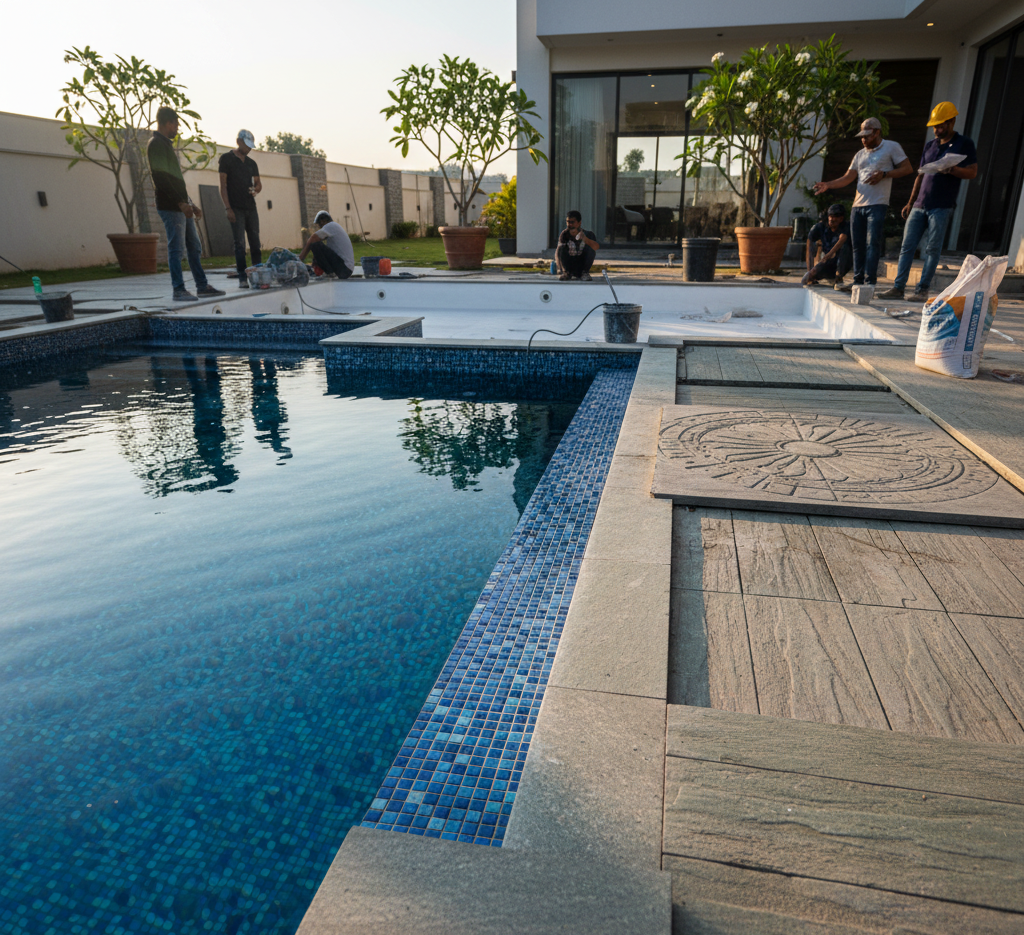
The interior finish choice dictates the aesthetic and the pool’s durability:
- Plaster: Economical but requires more frequent maintenance and potential refinishing.
- Quartz/Pebble Aggregate: Highly durable, offering a textured, luxurious finish with a lifespan of 15-20 years.
- Tile/Mosaic: Most premium option, offering artistic flexibility and maximum durability.
Decking Materials
Decking must be non-slip and sloped away from the pool for proper drainage. Popular local choices include: Indian Stone (e.g., Kota, Sandstone), Concrete Pavers, and Stamp Concrete.
8. Maintenance and Long-Term Operation
Routine Maintenance Cost
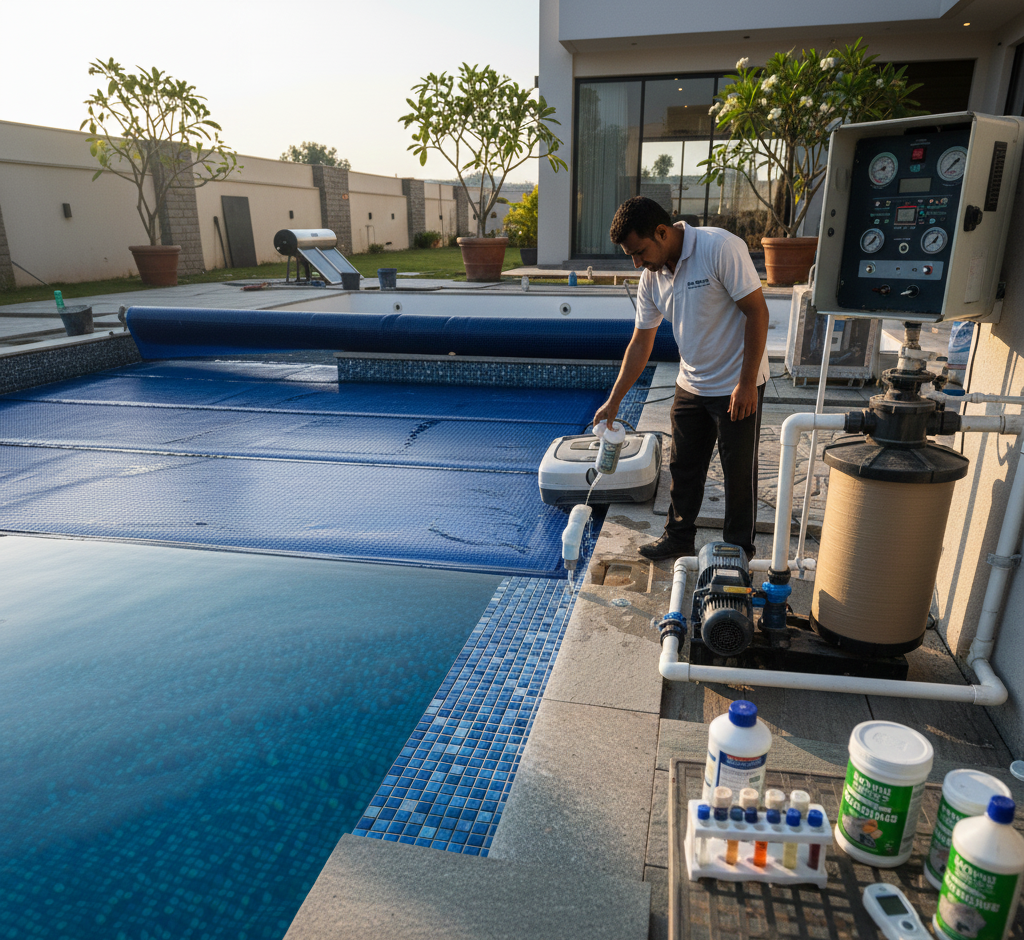
The average monthly maintenance cost (chemicals, electricity, basic labor) for a residential pool in India is typically ₹3,000 – ₹7,000.
| Maintenance Task | Frequency | Cost Impact |
| Water Testing & Chemical Balance | Weekly | Prevents costly algae outbreaks and equipment corrosion. |
| Filtration System Cleaning | Monthly | Optimizes pump efficiency and energy use. |
| Winterization (if applicable) | Annually | Prevents major freeze damage to pipes/equipment. |
Advanced Cost-Saving Strategies
- Use a Pool Cover: A solar or safety cover minimizes heat loss (up to 70% reduction) and significantly reduces water evaporation, saving on water and chemical consumption.
- Filter During Off-Peak Hours: Program your pump to run when electricity tariffs are lower.
- Regular Cleaning: A clean filter and pump operate more efficiently, reducing the load on your system.
9. Related Topic: DIY vs Professional Installation
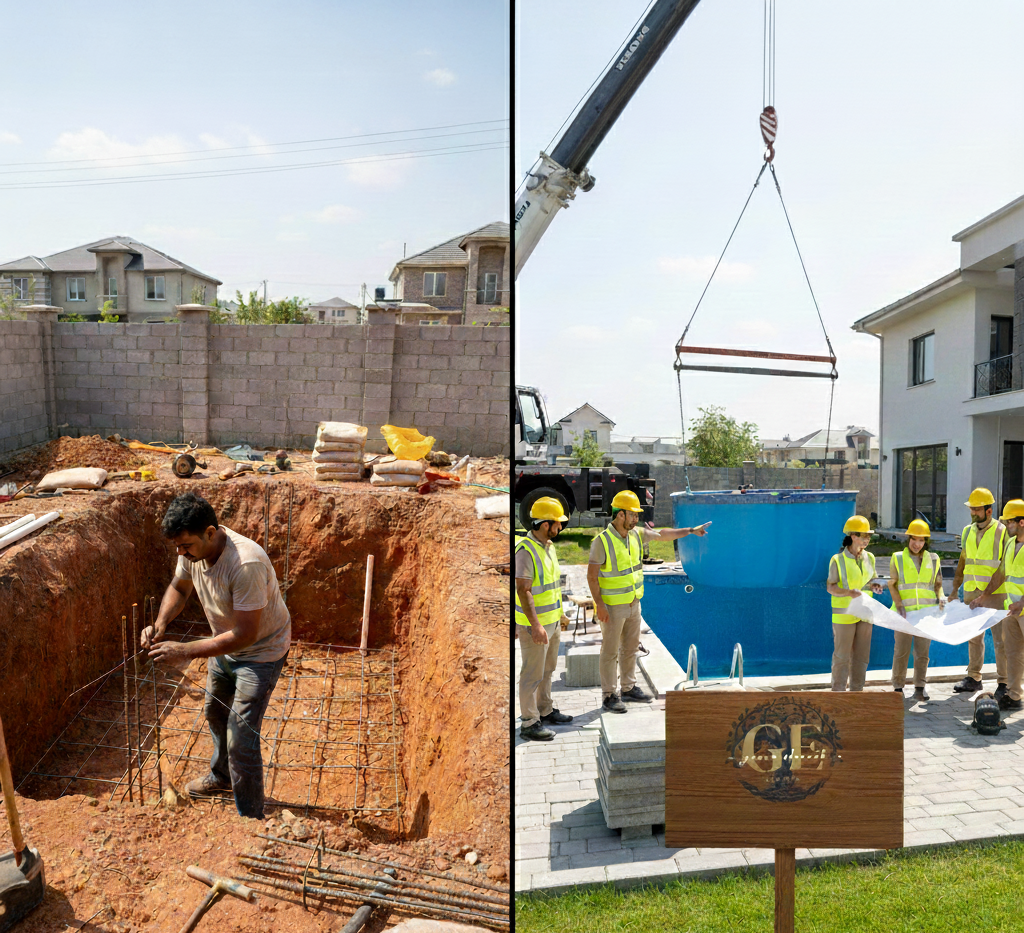
While the idea of a DIY pool can seem cost-effective initially, for complex in-ground builds, the savings are often negated by risks and costly mistakes.
| Aspect | DIY Installation (Self-Build) | Professional Contractor (Turnkey) |
| Initial Cost | Lower (Saves on labor) | Higher (Includes expertise and labor) |
| Time Commitment | Extremely High (Often takes months longer) | Managed and Defined (Typically 2–5 months) |
| Risk of Errors | High (Structural, Plumbing, Waterproofing) | Low (Guaranteed by licensed experts) |
| Warranty | None (You are liable for all failures) | Full Warranty on Structure and Equipment |
Conclusion
Building a swimming pool is a major investment that requires detailed planning, proper budgeting, and expert execution. By understanding each phase of pool construction, you can create a safe, luxurious, and energy-efficient leisure space that enhances your home for years to come.
For homeowners seeking professional excellence and expert guidance on how to build a swimming pool, Gouri Ekmeet Designs offers comprehensive, end-to-end services—from concept development and permit assistance to finishing and final commissioning. Our team of skilled swimming pool builders ensures every detail is handled with precision and care.